
When blending families in North Carolina, the central estate planning conflict rarely involves a fight over money itself. Instead, it revolves around competing priorities: protecting children from a prior marriage while ensuring a new spouse is supported.
If you rely solely on a standard last will and testament after remarrying, you risk accidentally disinheriting your biological children. Without a tailored strategy, your entire estate—including assets built long before your second marriage—could pass exclusively to your new spouse and, ultimately, to stepchildren.
Understanding North Carolina’s spousal protections and how to structure a blended family estate plan can prevent this outcome.
The Hidden Trap: North Carolina’s Elective Share Law
Many remarried spouses assume they can freely distribute their separate assets by drafting a will. However, North Carolina law includes a statutory protection called the Elective Share (N.C.G.S. § 30-3.1).
The elective share law prevents a surviving spouse from being completely disinherited, regardless of what a will, trust, or beneficiary designation states. It applies to the “total net assets” of the deceased spouse’s estate—including probate property, retirement accounts, life insurance proceeds, and revocable trust assets.
The percentage a surviving spouse can claim depends on the length of the marriage:
- Less than 5 years of marriage: 15% of total net assets.
- 5 to 10 years of marriage: 25% of total net assets.
- 10 to 15 years of marriage: 33% of total net assets.
- 15 years or more of marriage: 50% of total net assets.
Unless your spouse waives this right in a legally binding marital agreement, they can petition the court for up to half of your total assets upon your death.
Step 1: Waive Spousal Rights with Prenuptial and Postnuptial Agreements
A will or revocable trust alone cannot override a surviving spouse’s statutory right to an elective share. To modify or eliminate these default rules, remarried couples must execute a Prenuptial Agreement (signed before marriage) or a Postnuptial Agreement (signed after marriage).
Under North Carolina law, marital agreements can explicitly waive the elective share and other spousal inheritance rights. To ensure enforceability in court, both parties must:
- Provide full, written financial disclosure.
- Have independent legal counsel (or explicitly waive the right to counsel in writing).
- Execute the agreement voluntarily without last-minute coercion prior to the wedding date.
Step 2: Use a QTIP Trust to Protect Your Children and Spouse
Waiving spousal inheritance rights does not mean leaving a new spouse with nothing. A popular tool for blended families is a Qualified Terminable Interest Property (QTIP) Trust.
A QTIP trust allows you to support your surviving spouse while safeguarding the principal asset for your children:
- Lifetime Income for Spouse: The trust generates ongoing income distributions to cover your surviving spouse’s living expenses for the rest of their life.
- Preserved Remainder for Children: Your surviving spouse cannot alter the trust terms, sell the core assets, or redirect the remaining trust balance to their own heirs.
- Protected Inheritance: Upon your spouse’s death, the remaining trust principal automatically passes directly to your biological children from your prior marriage.
Combining a QTIP trust with a prenuptial or postnuptial agreement creates a complete framework that supports your spouse without compromising your children’s inheritance.
Protect Your Family’s Future Today
Remarrying without updating your estate plan creates significant legal risks for blended families. By combining marital agreements with specialized trust structures, you can support your new spouse and ensure your children receive the inheritance you built for them.
Contact our North Carolina estate planning team today by calling 919-659-8433 or directly scheduling a free discovery call at your convenience: calendly.com/caryep/discovery-call-get-started-cep-blog
Author Bio
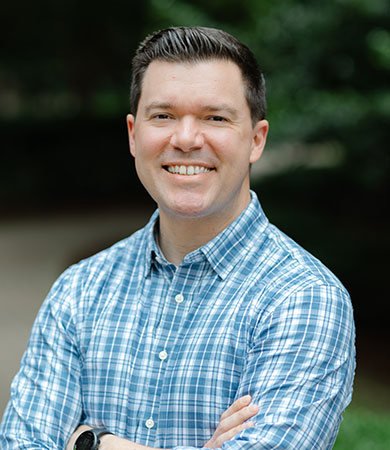
Paul Yokabitus
Founder & Estate Planning Lawyer
Paul Yokabitus is the founder of Cary Estate Planning, where he helps North Carolina families protect what matters most through wills, trusts, probate, and special needs planning. Known for his “planning, not paperwork” approach, Paul turns complex legal concepts into clear, practical strategies so clients feel informed and confident at every step. He has been recognized as a Business North Carolina Legal Elite attorney and a Super Lawyers Rising Star, and was named to the Triangle Business Journal’s 40 Under 40. A graduate of Campbell University School of Law, Paul lives in the Triangle with his wife, Alix, and their two sons.
Linkedin | Avvo | SuperLawyers







How We Help North Carolina Families




Paul and his team at Cary Estate Planning are fully committed to creating a personalized experience to develop thorough and comprehensive estate plans. They value their clients and go above and beyond to make sure that no details are missed. I would highly recommend Paul to anyone looking to create an estate plan.

I was referred to Paul by my Real Estate Attorney and I could not say enough about how exceptional the client service has been from everyone I spoke to. The communication is prompt and I feel like they really took the time to answer all my questions and set things up exactly as I wanted, but also recommended things to make it easier on my family down the line.
After attending one of Paul’s estate planning seminars, my husband and I knew we wanted Paul to assist us with our estate planning. His honest, professional approach to this necessary part of life put us at ease with the process. We will continue to recommend Paul and Cary Estate Planning.

We had a great experience working with Paul Yokabitus and the team at Cary Estate Planning to set up our Will and Estate Plan. The process was clear and easy, and in the age of COVID, our signing session was very well done, easy, and safe.
The Cary Estate Planning team will make sure that you have the information you need to be confident in your estate planning decisions. I learned so much from videos, a one-on-one in-person consultation, the website, emails, and a newsletter mailed the old fashioned way. The fee is very reasonable given the importance of estate planning. No matter the size or number of your assets, don’t procrastinate like I did!

Paul is a masterful attorney. He’s very good at taking your intentions and defining that into a durable Trust and Will. Best of all he is as simple and plain-spoken as you like. Or as fast as intellectual as you may be. It’s all about your your speed and your desired outcomes. Would strongly recommend this firm.
Trusted Estate Planning
Attorney Offices in Cary and Raleigh


Capability to meet virtually to help all NC residents