
You’ve been asked to handle someone’s estate, and the paperwork says either “executor” or “administrator.” If you’re not sure what the difference is, you’re not alone.
These two titles sound similar, and their jobs are largely the same. But how you get one or the other depends on whether the person left a valid will.
Let’s break down what North Carolina law says about each role.
What Is an Executor?
An executor is the person named in someone’s will to carry out its instructions after they die.
If the person who died (called the decedent) left a valid will that names you as executor, that’s your role.
The executor’s job is to:
- Notify family members and creditors that the person has died
- Inventory all assets owned by the estate
- Pay debts, taxes, and expenses of the estate
- Transfer assets to the people named in the will (called beneficiaries)
- Handle any disputes or legal issues that come up
- File final tax returns and close the estate with the court
Being named as executor in the will is what gives you the authority to act. You’re stepping into the role that the person specifically chose for you before they died.
Without a valid will naming you, the court cannot appoint you as an executor.
What Is an Administrator?
An administrator is appointed by the court to manage an estate when there’s no will, or when the named executor can’t or won’t serve. The court makes the appointment rather than the deceased person having chosen you beforehand.
The administrator’s duties are essentially identical to an executor’s:
- Identify and inventory all estate assets
- Notify creditors and give them time to file claims
- Pay debts, taxes, and administration costs
- Distribute remaining assets according to North Carolina’s intestacy laws
- Handle disputes and legal matters
- Close the estate with the court
When someone dies without a will, North Carolina law determines who gets the estate.
The inheritance order is:
- Surviving spouse receives a share
- Children receive their portions
- If no spouse or children, parents inherit
- Then siblings, then more distant relatives
The administrator’s job is to distribute the estate according to those rules instead of following the deceased person’s written instructions.
How the Appointment Process Differs
The path to becoming an executor or administrator is different under N.C. Gen. Stat. § 28A-4-1.
Executor Appointment
You’re appointed as executor when you:
- Present the person’s will to the Clerk of Superior Court
- File a petition asking to be appointed as the executor named in the will
- Provide the clerk with the original will and supporting documents
- Take an oath to fulfill the duties of an executor
- Pay a filing fee
Administrator Appointment
When there’s no will or the named executor can’t serve, the clerk appoints someone following a statutory priority order under § 28A-4-1(b):
- Surviving spouse
- Any devisee of the testator (if a will exists but the named executor can’t serve)
- Any heir of the decedent
- Next of kin, with closer relatives having priority
- Any creditor of the decedent
- Any person of good character residing in the county
- Any other qualified person not disqualified under § 28A-4-2
The clerk has discretion to deviate from this order if the best interests of the estate require it.
Both positions require probate to be opened with the court. Both give you the legal authority to act on behalf of the estate.
Bond Requirements for Both Roles
A bond is a type of insurance that protects beneficiaries if the person handling the estate mishandles funds.
Under N.C. Gen. Stat. § 28A-8-1, every personal representative must post a bond before letters are issued, with specific exceptions.
Executors may be exempt from bond when:
- The will specifically states the executor is excused from giving bond
- There is a resident co-executor serving alongside a nonresident executor
- The executor is a licensed trust institution
Administrators are generally required to post bond, but they may be exempt when:
- All heirs are over 18 years of age and file a written waiver with the clerk agreeing to relieve the administrator of the bond requirement
- The administrator is appointed solely for a wrongful death action (until property enters the estate)
The bottom line: If the will waives bond, the executor avoids it. If there’s no will, the administrator typically needs a bond unless all adult heirs agree to waive it in writing.
Duties Are the Same
Whether you’re called an executor or administrator, your core responsibilities are identical:
- Gather and protect estate assets
- Notify creditors and give them time to file claims
- Pay valid debts, taxes, and expenses
- Distribute what’s left to the rightful recipients
- File a final accounting and close the estate
The difference is the source of your authority and the instructions you follow. An executor follows the will. An administrator follows North Carolina intestacy law.
Both roles require careful attention to legal deadlines, proper record-keeping, and compliance with court requirements.
Making Sense of Your Role
If you’ve been named as an executor or appointed as an administrator, understanding your responsibilities is the first step toward managing the estate properly.
Our attorneys in Cary, Raleigh, and Chapel Hill regularly guide executors and administrators through the entire process with our personalized approach.
Many people feel overwhelmed by the role, especially if they’ve never done it before. There are legal rules to follow, deadlines to meet, and sometimes family dynamics to manage. You don’t have to figure it out alone.
During a free Discovery Call, we can review your specific situation, explain what your role requires, and answer your questions about the probate process. If you need ongoing help, a free Initial Strategy Meeting will outline exactly what needs to happen and how we can support you through each step. We proudly serve all of North Carolina, with attorneys based in Cary, Raleigh, and Chapel Hill.
Contact us today. We’re here to help you fulfill your duties correctly and efficiently.
Author Bio

Paul Yokabitus
Founder & Estate Planning Lawyer
Paul Yokabitus is the founder of Cary Estate Planning, where he helps North Carolina families protect what matters most through wills, trusts, probate, and special needs planning. Known for his “planning, not paperwork” approach, Paul turns complex legal concepts into clear, practical strategies so clients feel informed and confident at every step. He has been recognized as a Business North Carolina Legal Elite attorney and a Super Lawyers Rising Star, and was named to the Triangle Business Journal’s 40 Under 40. A graduate of Campbell University School of Law, Paul lives in the Triangle with his wife, Alix, and their two sons.
Linkedin | Avvo | SuperLawyers







How We Help North Carolina Families


Paul and his team at Cary Estate Planning are fully committed to creating a personalized experience to develop thorough and comprehensive estate plans. They value their clients and go above and beyond to make sure that no details are missed. I would highly recommend Paul to anyone looking to create an estate plan.

I was referred to Paul by my Real Estate Attorney and I could not say enough about how exceptional the client service has been from everyone I spoke to. The communication is prompt and I feel like they really took the time to answer all my questions and set things up exactly as I wanted, but also recommended things to make it easier on my family down the line.

After attending one of Paul’s estate planning seminars, my husband and I knew we wanted Paul to assist us with our estate planning. His honest, professional approach to this necessary part of life put us at ease with the process. We will continue to recommend Paul and Cary Estate Planning.

We had a great experience working with Paul Yokabitus and the team at Cary Estate Planning to set up our Will and Estate Plan. The process was clear and easy, and in the age of COVID, our signing session was very well done, easy, and safe.

The Cary Estate Planning team will make sure that you have the information you need to be confident in your estate planning decisions. I learned so much from videos, a one-on-one in-person consultation, the website, emails, and a newsletter mailed the old fashioned way. The fee is very reasonable given the importance of estate planning. No matter the size or number of your assets, don’t procrastinate like I did!

Paul is a masterful attorney. He’s very good at taking your intentions and defining that into a durable Trust and Will. Best of all he is as simple and plain-spoken as you like. Or as fast as intellectual as you may be. It’s all about your your speed and your desired outcomes. Would strongly recommend this firm.
Trusted Estate Planning
Attorney Offices in Cary, Raleigh, and Chapel Hill
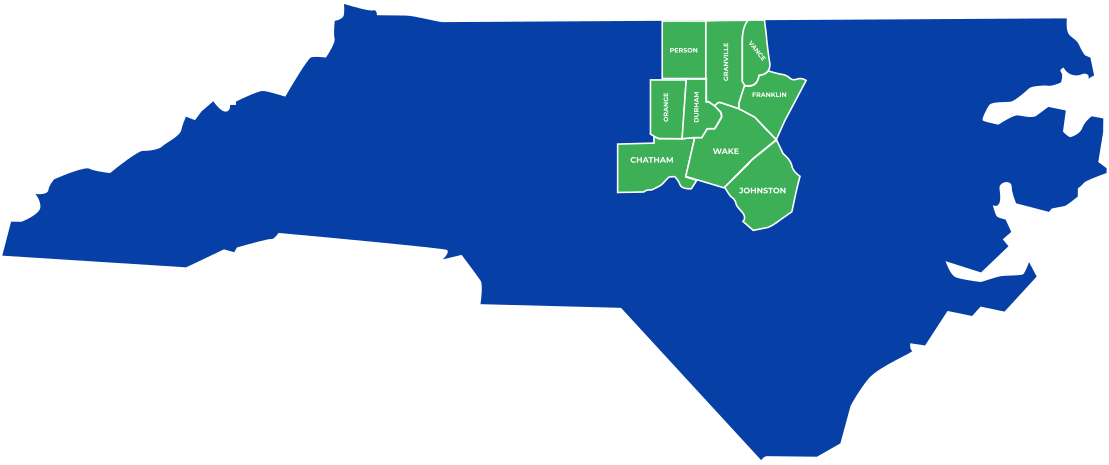

Capability to meet virtually to help all NC residents