Sometimes, but handwritten changes are one of the riskiest ways to change a will in North Carolina. A handwritten note on a typed will can be enforced only if it qualifies under the law. That usually means one of two things:
- A holographic codicil: handwritten words that are entirely in the will-maker’s handwriting and signed by them (N.C. Gen. Stat. § 31-3.4)
- A partial revocation: crossing out part of a will, done by the will-maker with the intent to revoke that part (§ 31-5.1)
Changes that don’t fit either category, such as initials beside a new name, an unsigned note in the margin, or an arrow moving a gift from one person to another, generally have no legal effect. The will is read as it was originally signed.
Even changes that do qualify often end up in court. One handwritten sentence on a North Carolina will led to years of litigation and a trip to the state Supreme Court. Here’s how the rules work, and how to change your will without inviting a fight.
The Three Ways a Will Can Be Valid in North Carolina
North Carolina recognizes three kinds of wills for passing both real estate and personal property (§ 31-3.2):
- An attested written will. It’s signed by the will-maker and by at least two competent witnesses, who sign in the will-maker’s presence (§ 31-3.3). Most attorney-prepared wills also include a notarized self-proving affidavit, which makes probate simpler.
- A holographic will. It’s written entirely in the will-maker’s handwriting and signed by them. No witnesses are required.
- A certified paper copy of an electronically stored will. This is a new option created in 2025 and is explained below.
A codicil is simply an amendment to an existing will. It must meet the same requirements as a will. That means a codicil can be formally witnessed, or it can be holographic.
When a Handwritten Note Counts as a Holographic Codicil
For a handwritten change to work as a holographic codicil, it must be:
- Written entirely in the will-maker’s own handwriting. Typed or printed words elsewhere on the page don’t ruin it, as long as they don’t affect the meaning of the handwritten words.
- Signed by the will-maker, or have the will-maker’s name written in or on it in their own handwriting.
- Written with present testamentary intent. The note must show the will-maker meant it to change the will now, not merely a plan to change it someday.
An important update many sources haven’t caught: North Carolina used to require that a holographic will be found after death among the will-maker’s valuable papers or in a safe place. The General Assembly repealed that requirement for estates of people who died on or after July 8, 2021. Many older articles, and even some law firm pages, still list it.
To be probated, a holographic will or codicil needs testimony from at least three competent witnesses. They must state that they believe the entire document and the name on it are in the will-maker’s handwriting (§ 28A-2A-9). If three people who knew the handwriting can’t be found, the codicil can fail.
What Happens When Someone Crosses Out Part of a Will
North Carolina allows a will, or any part of it, to be revoked by being burned, torn, canceled, obliterated, or destroyed. The act must be done by the will-maker, or by someone else in the will-maker’s presence and at their direction, with the intent to revoke (§ 31-5.1).
In theory, then, drawing a line through a gift can cancel it. In practice, cross-outs create three problems:
- Proof. After death, no one can ask the will-maker who made the mark, when, or why. Family members may disagree about all three.
- A cross-out can take away, but it can’t give. Striking a gift doesn’t hand it to someone new. It usually falls into the residuary estate, or passes by intestacy if there is no residuary clause (§ 31-42).
- Undoing it isn’t easy. A revoked provision can’t be brought back by erasing the line or writing “never mind.” Revival requires re-executing the will or signing a new will that incorporates the revoked language (§ 31-5.8).
What North Carolina Courts Have Said
In re Will of Goodman (1948): Handwritten Additions That Worked
In this case, the will-maker wrote several additions directly on her typed, properly executed will and signed them. One left a sum of money to her nephew. Another addressed her diamond ring. The North Carolina Supreme Court held that the handwritten additions formed a valid holographic codicil, and the will and codicil were read together.
In re Will of Allen (2018): One Sentence, Years of Litigation
James Paul Allen signed a properly witnessed, attorney-drafted will in 2002. Article IV of that will gave his nieces an interest in his real estate. Sometime later, a handwritten note appeared inside Article IV. It said “BEGINING 7-7-03 DO NOT HONOR ARTICLE IV VOID ARTICLE IV” and was followed by his name.
Mr. Allen died in 2014. His nephew offered the will for probate with the note. His nieces contested it, and the case went up through the courts:
- The trial court upheld the note as a valid codicil.
- The Court of Appeals reversed. It reasoned that the note depended on the typed text of Article IV to make sense, and that “beginning” might signal only a future plan.
- The North Carolina Supreme Court reversed again (In re Will of Allen, 371 N.C. 665 (2018)). It held that a handwritten codicil can amend a will simply by referring to a specific article. It doesn’t have to rewrite the whole provision.
The Supreme Court still didn’t decide who won. It found that the word “beginning” created a genuine question about whether Mr. Allen intended a present change. That question had to go to a jury. More than four years after his death, his family was headed back to trial over a single handwritten sentence.
The lesson: a handwritten change can be legally valid in North Carolina and still cost your family years of conflict and legal fees.
A 2025 Change: Electronically Stored Wills
A 2025 law created a new article allowing a licensed North Carolina attorney, at the will-maker’s direction, to store an attested written will as an electronic record (Chapter 31, Article 11). Two features matter here:
- Once a will is stored this way, it can no longer be revoked by physical act. Tearing up or crossing out the paper original won’t work. The will-maker must be advised of that before the will is stored.
- Losing or destroying the paper original isn’t treated as a revocation, and it doesn’t create a presumption of revocation.
If your will has been stored electronically, handwritten cross-outs on the paper copy will not change it. You’ll need a properly executed codicil or new will.
Quick Guide: Will a Handwritten Change Hold Up?
| Type of Change | Likely Legal Effect in NC |
| Handwritten addition, entirely in your handwriting and signed | May be a valid holographic codicil, but often contested |
| Handwritten addition that’s initialed or unsigned | Generally ineffective |
| Crossing out a gift, done by you with intent to revoke | May revoke that gift, but can’t redirect it to someone new |
| Crossing out one name and writing in another | The cross-out may revoke the gift, but the new name is valid only if it qualifies as a signed holographic codicil |
| Typed changes added after signing, without new witnesses | Generally ineffective |
| A separate handwritten list written after the will (for example, “who gets my jewelry”) | Generally not binding unless it qualifies on its own as a holographic codicil |
| Any physical change to a will stored electronically under the 2025 law | Doesn’t revoke the will |
That separate-list row surprises many families. North Carolina lets a will incorporate another document by reference only if that document already existed when the will was signed (§ 31-51). A list written later is generally not binding on its own.
Changes You Don’t Need to Make by Hand
Some life events update a will automatically:
- Divorce: After an absolute divorce or annulment, North Carolina treats the former spouse as having died before the will-maker. That covers gifts to them and their appointment as executor or trustee, unless the will says otherwise (§ 31-5.4).
- Mistakes in ambiguous wills: A court can reform an ambiguous will to match the will-maker’s intent if both the intent and the mistake are proven by clear and convincing evidence (§ 31-61). This isn’t a substitute for proper updates, but it’s an important safety valve.
The Right Way to Change Your Will
- Sign a formal codicil with two witnesses and, ideally, a self-proving affidavit. This works well for one or two targeted changes.
- Sign a new will for bigger changes, or when there have already been earlier codicils. A clean, current document leaves less room for dispute.
- Consider a revocable trust if you expect to update your plan often. Trusts are amended through their own procedures and can offer more flexibility.
- Never write on your original will. Even a note like “call Susan about this” can create confusion later.
Learn more about how we prepare wills and full estate plans.
If You’ve Found a Will With Handwritten Changes
If a loved one has died and their will has writing on it, handle the original with care. Protecting it preserves every family member’s rights.
- Don’t remove staples, clips, or attachments, and don’t add any marks of your own.
- Photograph every page and note exactly where the will was found.
- Keep the original safe and take it to the clerk of superior court or to a probate attorney.
- Identify people who knew the handwriting well, in case a holographic codicil needs to be proven.
- Act promptly. Will contests generally must be filed within three years after probate in common form.
How Our Personalized Approach Keeps Your Plan Current
Life changes: a new grandchild, a divorce, a falling-out, a move. Your will should keep up without a pen in the margin. Our personalized approach means we don’t just draft documents and disappear. We stay in touch so updating your plan is simple and done correctly every time. We call it planning, not paperwork.
Getting started begins with a free Discovery Call, where we learn what you’d like to change and confirm we’re a good fit. Then you’ll meet with one of our attorneys for a free Initial Strategy Meeting to review your current plan, the services you need, and pricing options tailored to your goals.
Frequently Asked Questions
Is a handwritten will legal in North Carolina?
Yes. A holographic will is valid if it’s written entirely in the will-maker’s handwriting and signed by them. No witnesses are needed when it’s written, but three people must later confirm the handwriting for it to be probated.
Can I cross out a name on my will?
Crossing out a gift with the intent to revoke it can cancel that gift. It can’t give the property to someone new, and it often leads to disputes. A codicil or new will is far safer.
Does a codicil need to be notarized in North Carolina?
A witnessed codicil needs two witnesses. Notarization isn’t required for validity, but a self-proving affidavit, which is notarized, makes probate easier. A holographic codicil needs no witnesses or notary.
What if the handwritten change was made by someone else?
Only the will-maker, or someone acting in their presence and at their direction, can revoke part of a will. Changes made by anyone else have no legal effect.
Update Your Will the Right Way
A few minutes with an attorney can save your family years of uncertainty. Contact us to schedule your free Discovery Call.
We proudly serve all of North Carolina, with attorneys based in Cary and Raleigh.
Author Bio

Paul Yokabitus
Founder & Estate Planning Lawyer
Paul Yokabitus is the founder of Cary Estate Planning, where he helps North Carolina families protect what matters most through wills, trusts, probate, and special needs planning. Known for his “planning, not paperwork” approach, Paul turns complex legal concepts into clear, practical strategies so clients feel informed and confident at every step. He has been recognized as a Business North Carolina Legal Elite attorney and a Super Lawyers Rising Star, and was named to the Triangle Business Journal’s 40 Under 40. A graduate of Campbell University School of Law, Paul lives in the Triangle with his wife, Alix, and their two sons.
Linkedin | Avvo | SuperLawyers







How We Help North Carolina Families




Paul and his team at Cary Estate Planning are fully committed to creating a personalized experience to develop thorough and comprehensive estate plans. They value their clients and go above and beyond to make sure that no details are missed. I would highly recommend Paul to anyone looking to create an estate plan.

I was referred to Paul by my Real Estate Attorney and I could not say enough about how exceptional the client service has been from everyone I spoke to. The communication is prompt and I feel like they really took the time to answer all my questions and set things up exactly as I wanted, but also recommended things to make it easier on my family down the line.

After attending one of Paul’s estate planning seminars, my husband and I knew we wanted Paul to assist us with our estate planning. His honest, professional approach to this necessary part of life put us at ease with the process. We will continue to recommend Paul and Cary Estate Planning.

We had a great experience working with Paul Yokabitus and the team at Cary Estate Planning to set up our Will and Estate Plan. The process was clear and easy, and in the age of COVID, our signing session was very well done, easy, and safe.

The Cary Estate Planning team will make sure that you have the information you need to be confident in your estate planning decisions. I learned so much from videos, a one-on-one in-person consultation, the website, emails, and a newsletter mailed the old fashioned way. The fee is very reasonable given the importance of estate planning. No matter the size or number of your assets, don’t procrastinate like I did!

Paul is a masterful attorney. He’s very good at taking your intentions and defining that into a durable Trust and Will. Best of all he is as simple and plain-spoken as you like. Or as fast as intellectual as you may be. It’s all about your your speed and your desired outcomes. Would strongly recommend this firm.
Trusted Estate Planning
Attorney Offices in Cary and Raleigh
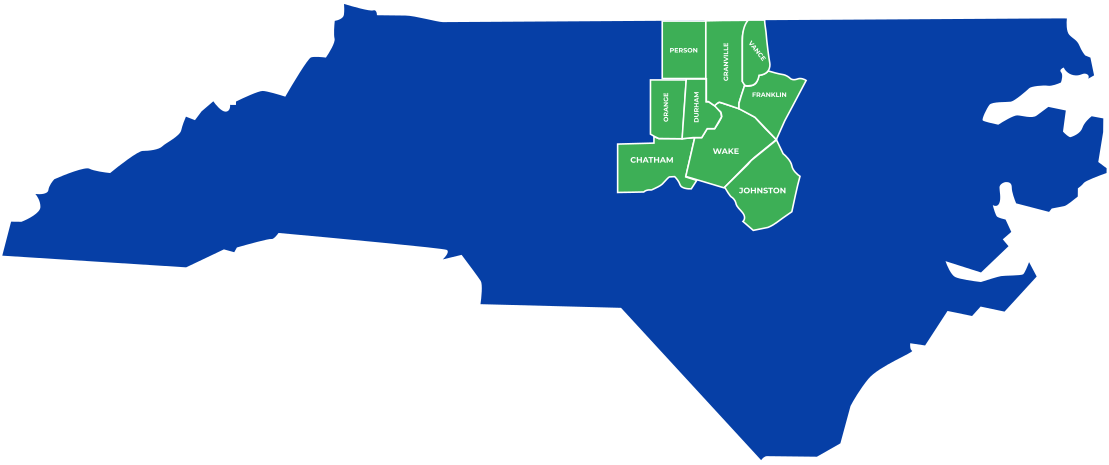

Capability to meet virtually to help all NC residents